
It's called a rice cake, but that's inaccurate and confusing. Rice cakes are those styrofoam slices of a toilet paper roll sold by the dirty dozen for dieters. Oops, my bad. I mean lifestyle-changers.
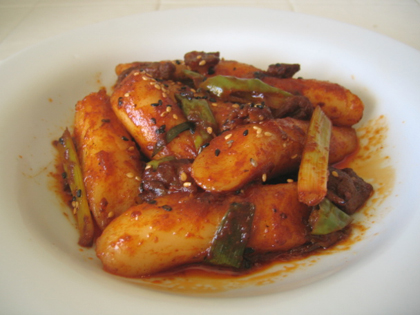
The word "dduk" is just too general of a Korean term to be translated simply to "rice cake" in English. Let me say this right now. Dduk is not a rice cake. For one thing, dduk is absolutely nothing like Quaker's air puffed answer to the Battle of the Bulge. Furthermore, dduk is made of rice flour, not rice, and only in a few forms does it resemble anything like cake. Dduk refers to a whole class of foods that could include cake, made from regular or sweet rice flour and water, shaped, then cooked (usually steamed). It would be similar to a one word English descriptor for "breads, cakes, pasta and other things made of flour." It's not a rice cake!
*whew* I feel better now that I got that out.
Dduk can be sweet or savory, eaten as is, or cooked into other dishes. Dduk is really more like a rice flour dumpling that comes in a variety of shapes, sizes, and flavors. Certainly, some of the sweet dduks, which have gotten their fair share of the Delicious spotlight, look like cake because they're steamed in large pans or trays, then cut into rectangular pieces. But there are plenty of sweet, dessert dduks that are shaped and deep-fried like doughnut holes, or shaped around a sweet filling like a wonton. Sweet dduks are a final product, and are eaten as is. Just as a note, I don't love dessert dduk. It's not that sweet.
Savory dduk is not a final product; it's an ingredient for other Korean dishes. Dduk is made with plain rice flour and water, formed into a few familiar shapes, then eventually used as an ingredient for other dishes. My very ingenius, lovable Dad thinks he's gourmet cooking when he adds dduk to ramen. But you know, he adds Spam, too ;) As a savory ingredient, dduk, then, is similar to an Italian pasta. In fact, the technique for making dduk would basically make it a rice gnocchi. Again, it's not a rice cake.
There are two notable dishes that use dduk. Dduk gook is a soup that uses dduk shaped like small flat ovals. I have never heard the term used anywhere else, but the package of dduk always calls them "ovalettes." Silly Koreans! Dduk bok-ki is made from plain dduk that's usually in the shape of long, solid cylinders about the size of my middle finger (I have small hands with pudgy fingers). I've seen the ovalettes used as well, but it's probably only when they're leftover in the freezer, from making dduk gook the week before.
Dduk bok-ki appears on many Korean restaurants menus, but I've always associated it with much more of a street, snack or Korean cafe food. Like kimchee dooboo, it's great to pick at over many gleeful cheers of "gum-bae!" or to sober up late at night after a glorious bout with soju and some VSOP. Big, fat, spicy carbs work wonders unknown to the makers of Chaser and Alka Seltzer Morning Relief.
It's easy to make, which automatically qualifies dduk bok-ki for cafe food. It's also why dduk bok-ki made me fat in college, and then subsequently made it onto my do-not-eat list for about five years afterward. Dduk bok-ki is deliciously naughty. It's not that it's bad for you. It's that it tastes so good you end up eating way too much than is necessary. Only recently has dduk bok-ki made its way back into my diet. I mean lifestyle. But only for this brief moment, until after September.
Leftover bulgogi, or even sliced galbee, is the meat of choice in these parts, but in some fancy kitchens, they use sliced Spam. Stirfry the meat and dduk that has been soaked in water to soften and pouf it, with onions, scallions, and maybe some other vegetables. Add a few shots of Korean red pepper paste goh-choo-jahng (more if you're a devilette like me), soysauce, some water to thin it out if need be, pepper, and a sprinkle of sugar. Just a sprinkle, otherwise you may get sticky sweet results in things that should not be desserts. If you're fancy, you can garnish with sesame seeds. Yes, fancy.
More Dduk Recipes
- Vegetarian Dduk Gook
- Dduk Gook, Korean Rice Cake Soup
- Dduk Mandoo Gook, Korean Rice Cake and Dumpling Soup
Dduk Bokki, Korean Spicy Rice Cakes Recipe
Ingredients
- 1 lb package of dduk thawed if frozen
- ½ lb. any thinly sliced beef the same kind used for bulgogi, and in fact, if you have marinated bulgogi, this is the best
- any vegetables you want to add like onions carrots, mushrooms, and bell pepper (i use green onions only)
- 2 Tbsp soy sauce
- 2 Tbsp gohchoojang Korean red pepper paste - more if you're a pyro
- ½-1 tsp gohchoo garoo Korean red chili pepper powder
- 2 Tbsp sugar
- 2 Tbsp sesame oil
- 1-2 cloves garlic super finely minced
- salt/pepper to taste
Instructions
- Remove the thawed dduk from the package and soak in cold water on the countertop for at least an hour, but overnight is best. I have no idea what this does to the dduk, but it's what my Mom does.
- Drain the water and cut the dduk into 2-3" pieces. Drop into boiling water and cook until soft all the way through (like pasta), about 5 minutes. Drain.
- In a small bowl, mix together the soy sauce, gohchoojang, gohchoo garoo, sugar, sesame oil and garlic. The "sauce" should have the consistency of ketchup. If it's too thick, add a little bit of water. If it's too thin, too bad.
- In a large frying pan or wok over medium heat, stir fry the beef and vegetables in a little bit of cooking oil until cooked through. Add the dduk and the sauce and stir fry just until everything is coated and evenly heated.
- Taste, hit with salt and pepper if needed, transfer to a serving plate. If you're fancy, garnish with toasted sesame seeds.
LACheesemonger says
Interesting Sarah, but somewhat confusing ;), reading the link to that Korean specialty dessert store.
Hmm, same thing applies to Chinese desserts in a way. Lots of bean paste stuff, that's not really of the type of sweetness that us white-bread Americans are used to, LOL. Kind of like the Lychee nuts have this cloyingly sweet, hard candy like flavor. All that sesame seed balls stuff is newer style, as well as the little custard tarts that everyone thinks is synonymous with Dim Sum service; all 'new traditional', same with some of the sweetened dim sum items-not for dessert-that they bring around in the carts. I once made the mistake of buying this curious looking deep fried item at HKPalace, but it turned out that the deep orange color was from the yams it was primarily made of. Just an oily, fattening unhealthy, mushy, sweet mess... won't work with any wine!
A more 'traditional' (older) type of item to finish a Dim Sum meal with the last of the tea (besides the quite good Sunshine Bakery's version of 'Thap Cam" mooncake) is the ubiquitous triangular cut, steamed sweet rice cakes. Gelatinous sugary sweet rice, it's another acquired taste, my mother likes them, but they are too bland/uninteresting for me.
But honestly, (ok I'm more demented than 'deviliciousSarah', but it's partly her fault) I was reading your description, and you would have to mention your finger as an example! Now all I could image was the thought of those fingers ending up in people's food! How do you expect anyone to eat your Dduk bok-ki, if they are reminded of cut-off fingers getting into food items at restaurants in the news recently, LOL? Hmm, Dduk bok-ki, fries, gnocchi; *naughty* asparagus spears; I think we're following a pattern here. No wonder Sarah gets fat eating excessive amounts of these...pent up frustration? Could this be an edible(Oedipal) complex, hehe. Yeah, I know; I'm bad ;-)
"dduk bok-ki made me fat in college...Only recently has dduk bok-ki made its way back into my diet. I mean lifestyle" Huh, so are you saying that you'll purposely get fat before your sisters wedding by eating this again??? :confused:
Two things I don't really care for in recent fads for Asian cooking, is the prevalence of the use of sesame seed in EVERYTHING! Enough already! And too much garlic, what's with the stuffing too much garlic into all manner of Dim Sum dumplings and everything else!? Anyone herd of the concept of finese or balance?
Peanut butter and Jelly sandwiches (bread no good when trying to lose weight) might get your DL blog updated, but it will widen the waistline. Better to fixate on low cal salads, with l/cal dressing like TJ's LF parmesan Ranch Dressing. Copious amounts of salsa with low fat chips.
"devilette" Sarah, by virtue of a little pepper paste, come now? Want to have some more fun, then try dropping a half dozen of these tiny innocuous looking Chiltecpin Pepper plant (aka 'bird pepper', the only native American pepper, indigenous to the area when C. Columbus arrived) pods into your food. They call it a bird pepper because birds just eat them the same as any other berry, like raspberries or Holly berries, etc. Being related to pre-historic dinosaurs, birds are not effected by the pain nerve binding capability of the 'heat' component of chile peppers, capsaicin; which is used in purified form for 1.5M Scoville Heat Unit(SHU) defensive sprays. Throw a few of these 100k SHU rated pea sized 'berries' or cherry bombs ;) onto a pizza or any other items that unsuspecting people will eat :devil: . But being a ancient form of chile pepper, the capsaicin is of a slightly different chemical form, which translates into a shorter duration of suffering- about 5-10min, compared to 15-20 minutes of others.
For the really insane fire eaters, there's the Habanero. Typical orange 'lantern' shaped version you can buy in most larger markets these days, hits an average of 300k SHU, and is truly thermonuclear in its devastating power. The Red Savina variety of the Habanero is in the Guinness book of world records at 500k SHU (I have some seeds, but haven't gotten around to ever having anyone plant them). I recall taking some dried habanero into a Issan style Thai restaurant and telling the female behind the order desk, that I wanted the spiciest/hottest of their Issan style entrees, then showed her the habanero and told her it was hotter than anything they have their, cause she did not believe I could handle Issan style, lol. She picked a few seeds and nibbled on them, and asked where I got such a bizarre devilish pepper, hehe.
Habanero's are not for people of week constitution. There is the TMI, 3-way 'burn' to contemplate before ingesting. It brings new meaning to 'fire in the hole' :), but that's just the beginning and the ending pathway (nothing like having your arse on fire!, your body telling you in no uncertain way, that you are a damn fool!). See, in the middle section of the digestive system, you can experience very, very uncomfortable side effects, and then around 2 hours or so later, you best be very close to a place that you can 'relieve' yourself as when the offending substance makes it's way to that location of final exit, it is impossible to stop the rapid/expeditious exit of such offensive materials! They say that if you eat peppers regularly you can build up a tolerance. Unfortunately, I don't eat enough to make it so. Very old-fashioned (traditional???) Cantonese cooking has no hot/spicy items at all; compared to HKstyle, which is never the less still far less spicy than Chinese cuisine farther north of that area.
There I did it, a post longer than Sarah's initial entry...woot!
Sarah's slacking off ;)
Helen (AugustusGloop) says
I love dduk--it's starchy. It's a winner.
I was going to ask you how you pronounce dduk (is that a silly question) but I don't think I will after the impressively composed comment above =)
Reid says
Hi Sarah,
I love duk bok ki, however, it's not served in as many places here for some reason. I've tried to make it at home before, but it didn't turn out too good. =(
sarah says
AG: it rhymes with "duck," but the "dd" sound in the beginning is a harder sound, somewhere between a "d" and a "th." wow. it's pretty hard to describe how it sounds, LOL!
hm, i would think with all the koreans re-pra-zentin' out in hawaii, there would be more dduk bok-ki. how about pah jun? that's my favorite :) is it just kimchee and galbee that hawaii gets from korea?!?! ;)
sarah says
oh yah, and lacheesemonger, that is why i said dduk bokki has made a temporary return to my diet, "only for this brief moment." you know, everything in moderation. i mean, i ate an avocado earlier this week, too. just not ALL of it, and not every day.
MEalCentric says
haha...I used to date this Korean girl and her mom was a great cook. I would munch on the uncooked rice cakes as she cooked the family dinner. She would scold me in Korean! ah, memories. Thats for the flashback
stef says
wow, see, this is the reason i love your blog. i learn so much, even more so than from cookbooks!!! thanks for the great post!
milgwimper says
Sarah,
This is a food near and dear to my heart but not to my waistline. I love ddukbokki, and coould eat it everyday. Well ok maybe not, but pretty darn close! I just love to put a lot of yachae (veggies) in mine, and make it a meal.THANKS for the wonderful post.
Reid,
Ddukbokki, isn't that hard, but the more you practice the better it gets. Also no two persons ever make it exactly the same. Also the reason you tend to not see it in restaurants much is because it is a street food/cafe food. It is mainly eaten for snacks. Sara is correct though, when it is good it is hard to stop eating.
hermz says
oh, the sauce is just based on goh-choo-jahng? I thought it was more complicated for some reason. Well then, I'm gonna make some.
sarah says
actually, it's not JUST goh-choo-jahng. like there's some sesame oil, soy sauce, sugar, water, etc...but basically, the same korean sauce used for EVERYTHING, but in a different proportion :)
and if you make it, i must try it!
Anonymous says
Any advice on how to reheat dduk bokki?
Matthew says
Great info on rice cakes. I had my first experience with rice cakes over 10 yrs ago at Dok Suni in NYC. Spicy and delicious. Thanks for the recipe ideas since I just picked up some rice "ovalettes" and was looking for some recipes.
Anonymous says
"nonymous said...
Any advice on how to reheat dduk bokki?"
Don't... it does not reheat well. Eat all that you make.
Cassandra says
I am on a mission to learn how to make dduk/ovalettes! Where can I find directions?
Bill says
I have eaten duk bok gi many times when I lived in Ko-rea. It was deliscious every time flat. thank you!!
Sarah J. Gim says
Cassandra: You can follow the same instruction here to make Dduk Bok-ki with the thin, flat ovalettes!
Bill: You're welcome!
julie says
i used your recipe and it was amazing. thank you!
dave says
Great, now I know everything I need to know about dduk bok-ki, except, why the heck does the word "dduk" have 2 d's in it?
wqsaey says
I'm sorta guessing, but the letter they use in Korean is the equivalent of a 'd', and since in the Korean name for dduk bok ki two of them are used, it was romanized into 'dd'. Man, why must it be so hard to try to describe pronunciations from other languages? I hate English!
Emma says
^^ In the Korean alphabet, there is a regular "D" (called di-gut in Hangul) and a "Dd" (called a ssang-di-gut) which is really accentuated and your pronounce it sharply.
Minneapolis says
Any advice on how to reheat dduk bokki?
Anonymous says
Add some water then microwave
Margie says
Thank you so much for this recipe! I made this last night and it came out great. I made one small change because I didn't have any beef in the house: I just increased the veggies, using a combination of finely sliced savoy cabbage, finely slice carrots and green onions.
I need to stop nibbling on it - even cold from the fridge and super chewy, it's delicious!
Unsureaboutanswering says
I love the base recipe! I added some extras but thank u!
NatalieTamara says
Of course it can be made vegetarian by omitting the meat (though in the hundreds of times I ate this in Korea I never once got it served up with meat or spam in, just often with odeng fishcakes - I leave those out at home too)
Jovilyn Arana says
this is ha ji wons favorite food
Diane says
Definitely making this tonight. My apartment will be a haven of Korean food in Paris.
Sarah J. Gim says
how did your dduk bokki turn out, diane?!
Diane says
It turned out well! I found an Asian grocery store here that stocks dduk and gochujang. After I tasted it I realized that my palate has gotten a bit more French -- I don't think there is anything that spicy served in any restaurant in Paris.
Julie Neusner says
I have been making this recipe consistently for the past 3 years and I'm obsessed with it. Thank you!!
Gabs says
most people I know who are Korean including my mom translate dok to rice cake.. like if mom brings home an assortment of sweet doks we call it rice cake in English. I think what you wrote was bias. Cuz honestly in Korea, dok is like the equivalent of cake. best "dessert" eva!
Tory says
"dok" is rice cake. the rice flour is grounded up rice -_- the only difference is that the grounded up rice is actually sweet rice which is what makes the rice cake taste sweet in regular rice cakes.
Nyasha says
Lovely recipe! I always love to read other people make ddukbokki because there is always something different to others especially yours. I hope you can have a look and comment mine too here: http://nyamwithny.com/nyam-recipes-ddukbokki/ I always find it good to add sesame oil and sesame seeds.
What would you say is the first thing your fork or spoon goes for when you go for ddukbokki? Mine is the fishcake!